

3. Jinja2 Syntax Notes#
3.1. 1. Variables#
{{ EXPRESSION }}
3.2. 2. Conditionals#
{% if EXPRESSION %}
    ...
{% elif EXPRESSION %}
    ...
{% else %}
    ...
{% endif %}
3.3. 3. Loops#
{% for item in items %}
    ...{{ item }}...
{% endfor %}

Loop special variables:

{{ loop.index }}        {# 1-based #}
{{ loop.index0 }}       {# 0-based #}
{{ loop.first }}
{{ loop.last }}
3.4. 4. Template Inheritance#
{% block block_name %}{% endblock %}

{% extends "extended_template_name" %}
#Example:

#layout.html
<!DOCTYPE html>
<html>
<body>
  <h1>Site Header</h1>
  {% block content %}{% endblock %}
</body>
</html>

#webpage.thml
{% extends "layout.html" %}

{% block content %}
  <p>This is the page content.</p>
{% endblock %}
3.5. 5. Including Templates#
{% include "included_file_name.html" %}
3.6. 6. Macros#
{% macro button(text, type="primary") %}
  <button class="{{ type }}">{{ text }}</button>
{% endmacro %}

{{ button("Save") }}
{{ button("Delete", "danger") }}
3.7. 7. Importing Macros#
{% import "macros.html" as ui %}
{{ ui.button("Click me") }}
3.8. 8. Filters#
{{ name | upper }}
{{ text | replace("old", "new") }}
{{ items | length }}
{{ content | safe }}    {# do not escape HTML #}

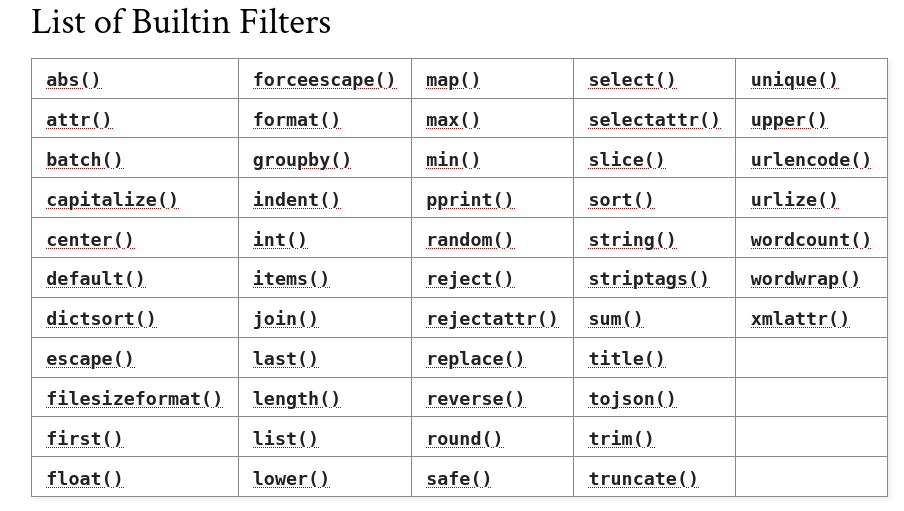
Common filters:
upper, lower
title
length
replace("a","b")
join(", ")
safe (disable autoescape)
default("value")
3.9. 9. Set Variables in Template#
{% set total = price * quantity %}
<p>Total: {{ total }}</p>
3.10. 10. Raw Blocks#
{% raw %}
{{ this_will_not_be_rendered }}
{% endraw %}
3.12. An jinja2 API example#
import jinja2

env = jinja2.Environment(loader=jinja2.FileSystemLoader("./templates"))
temp = env.get_template("content.html")
html = temp.render(add_block2=True, title="<h1>Test</h1>")
print(html)
3.11. 11. Comments#